The considered bedroom
How to Choose Breathable Sheets for Every Season
The right sheet is less a matter of thread-count mystique than of touch, airflow, fit, and the way you sleep. From the relaxed texture of organic linen to the crisp finish of cotton percale, this guide helps you choose breathable bedding that feels right in every season—and stands up to everyday care.
Start with the way you sleep
Sheets are the closest layer between the sleeper and the bed, so their character can shape the entire experience of a night’s rest. A fabric that feels airy and dry to one person may feel too textured or cool to another. Room temperature, humidity, mattress materials, sleepwear, and personal temperature preference all play a part. The most useful starting point is not a universal claim about the “best” sheet, but a clear sense of what you want from one.
Do you tend to wake warm, or do you prefer a bed that feels gently cocooning? Do you love the lived-in softness of a rumpled surface, or the clean, crisp sensation of a freshly made hotel bed? Do you want one set to work throughout the year, or would you rather change fabrics with the seasons? These preferences can narrow the field more reliably than a headline number on a product label.
Breathability is often used as shorthand for comfort, but it describes a combination of qualities. A fabric’s fiber, yarn, weave, weight, finish, and construction influence how air and moisture move through it. A breathable sheet may help reduce that clammy feeling associated with trapped warmth, but it cannot regulate every bedroom environment or guarantee a particular sleep temperature. Think of it as one component of a considered sleep setup, alongside bedding layers and the conditions in the room.
What makes a sheet breathable?
Natural fibers such as flax linen and cotton are frequently chosen for sheets because they can feel comfortable in a range of conditions. Yet fiber alone does not tell the whole story. Two cotton sheets can feel strikingly different depending on whether they are woven as percale or sateen, while linen can vary in weight, finish, and texture. The way a cloth is made is just as important as the name of the material.
Weave describes how yarns cross one another to form fabric. A classic percale weave uses a simple, balanced interlacing that typically gives the cloth a crisp, matte hand. Sateen uses a different arrangement that can create a smoother surface and a subtle sheen. Linen’s recognizable character comes from flax yarns and their woven structure: many linen sheets have a relaxed drape and a more visibly textured surface. None of these descriptions alone determines quality, but they offer useful clues about feel.
Fabric weight can also inform your choice. A lighter cloth may feel more airy, while a heavier one can feel substantial and enveloping. Weight is not a direct measure of comfort or durability; it is one specification to consider alongside the weave and your own preference. When a product listing includes a weight such as grams per square metre, compare similar fabric types rather than assuming that a larger number automatically means a better sheet.
Finishes matter, too. Pre-washing, garment-washing, stone-washing, or other finishing processes can alter a fabric’s softness, drape, and first impression. A smooth, polished sheet and a softly rumpled one may be made from similar fibers, yet feel quite different against the skin. For sensitive sleepers, people shopping for nursery bedding, or anyone attentive to textile processing, it is worth reading the maker’s description of dyes, finishes, and certifications rather than relying on broad phrases such as “natural” or “clean.”
Organic linen: relaxed texture, lasting character
Linen begins with flax, a plant cultivated for its fiber. The yarn is woven into a cloth with a distinctive texture and a natural drape. Organic linen sheets appeal to sleepers who enjoy that easy, slightly tactile feel and want bedding that does not need to look perfectly pressed. Their aesthetic is quietly informal: inviting, rather than immaculate; considered, rather than overly styled.
Linen is often described as breathable and moisture-managing. In practical terms, many people appreciate its ability to feel comfortable across changing conditions, especially when they do not want a sheet that feels overly plush or dense. It can be a compelling choice in warm weather, but it is not reserved for summer. Layered with a duvet or blanket, linen can remain part of a year-round bed. Comfort still depends on the individual, the room, and the rest of the bedding.
One of linen’s pleasures is the way its hand can change with use and washing. A new set may feel more textured than a familiar cotton sheet, and many linen fabrics become softer over time. That evolution is part of the appeal, although it is not the right feel for everyone. If you prefer a smooth surface from the first night, cotton percale or sateen may be a more natural match.
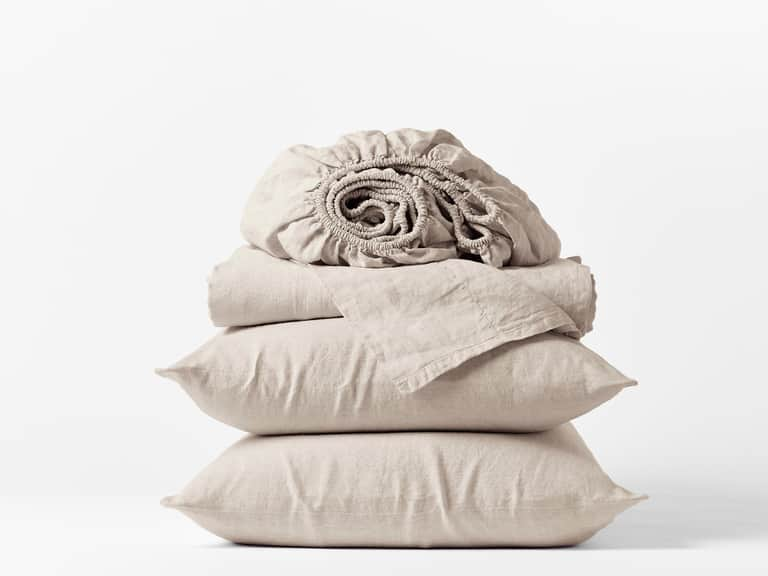
For an example of the specifications worth checking, the Organic Relaxed Linen Sheet Set is described as woven from organic flax grown in France and linen woven in Portugal, with GOTS certification, a fully elastic fitted sheet, and a deep pocket. Its care guidance calls for a cold, gentle wash and low tumble-dry heat. Details like these—fiber source, weaving location, certification, construction, and care—make a product listing more useful than a broad claim of comfort alone.
Organic linen may suit someone who values a relaxed finish, appreciates a fabric that can soften with use, and is willing to follow its care instructions. It may be less appealing if a crisp, cool-to-the-touch surface or a smooth, silky finish is the priority. Neither preference is more sophisticated than the other; the best sheet is the one you want to return to at bedtime.
Cotton percale: crisp and airy
Cotton percale is a familiar alternative for sleepers who gravitate toward a crisp, matte feel. Its balanced weave is often associated with an airy, freshly laundered sensation. People who sleep warm or live in a warm climate may enjoy that lighter impression, while those who love a soft, draped fabric may find percale too crisp at first.
Percale is not a single level of quality, nor does thread count explain everything about how it will feel. Fiber length, yarn quality, weave, finishing, and construction influence performance and hand. A moderate thread count in a well-made percale can feel appealingly light; a larger number should not be treated as a guarantee of comfort. Look for the fabric type and read the care label, then consider whether the stated feel matches your preferences.
Expect the surface to change somewhat with laundering. Some percale softens with repeated washing, while retaining a more structured character than relaxed linen. It can be an appealing choice for a sleeper who wants the familiar ease of cotton with a crisp finish. A cotton percale sheet is also a useful point of comparison when deciding whether linen’s natural texture feels inviting or simply too pronounced.
Cotton sateen and other alternatives
Cotton sateen offers a smoother, often more fluid surface than percale. Its characteristic finish may feel soft and subtly lustrous, making it attractive to people who prefer a polished, gently draping sheet. Sateen can feel more enveloping than crisp percale, though the actual experience depends on the particular cloth’s weight, weave, and finishing. If you are uncertain, compare the makers’ descriptions of hand and construction rather than choosing by the word “cotton” alone.
Other materials may appear in breathable bedding collections, but they should be assessed on their own terms. A fabric blend can combine qualities from different fibers, while specialty cottons may be prized for smoothness or strength. The right comparison is not simply “natural versus synthetic” or “linen versus cotton.” It is how the sheet feels, what it is made from, how it has been processed, and whether the full set suits your bed and routine.
For shoppers prioritizing organic materials, look for precise descriptions of fiber content and certification. “Organic” should not be treated as a universal shortcut for softness, safety, or environmental impact. A credible claim identifies what is certified and, where available, provides the standard and scope. The label is one part of the assessment; construction and care remain essential.
Choose by season without overcomplicating the bed
Seasonal bedding can be as simple as changing the layers around your sheets. If summer nights tend to feel warm, a breathable sheet paired with a lighter blanket may be more comfortable than changing every element of the bed. In colder months, linen or cotton sheets can still work well when combined with a warmer duvet or an additional layer. The sheet does not need to perform every job at once.
For warm weather: Consider a light, breathable-feeling fabric and a weave you enjoy against bare skin. Cotton percale’s crisp hand can feel refreshing, while linen’s relaxed texture appeals to those who prefer a more tactile, easy drape. Keep the rest of the bedding appropriately light, and remember that room ventilation and humidity affect comfort as much as the sheet itself.
For transitional seasons: Choose a versatile set based on your usual sleep temperature rather than the calendar. Linen is often valued for its ability to feel at home in more than one season, while cotton’s different weaves give shoppers options from crisp to smooth. A dependable sheet set can remain in rotation as the duvet and coverlet change around it.
For colder months: A comfortable bed usually comes from thoughtful layering rather than selecting the heaviest sheet available. Add warmth with a duvet or blanket and consider whether you prefer the substantial feel of linen or a smoother cotton surface. If you run cold, a crisp sheet may be less appealing at first contact, even if the room is well insulated.
Seasonal advice is a guide, not a rule. A warm sleeper in winter may still want a light, airy sheet; someone who feels cold easily may prefer a smoother, more enveloping surface in July. Pay attention to your habits over several nights, not just the weather outside. Your own comfort is the most relevant measure.
Read the label like a textile-minded shopper
Product descriptions can be beautiful, but the practical details deserve equal attention. Before choosing a set, check the fiber content, the weave or fabric type, the dimensions, the origin details provided, the certification language, and the care instructions. These details help distinguish a considered purchase from one made on atmosphere alone.
- Fiber content: Confirm whether the sheet is linen, cotton, or a blend, and whether it is described as 100% of that fiber.
- Weave and finish: Look for terms such as percale or sateen, as well as notes about garment-washing, pre-washing, or other finishes that may affect handfeel.
- Certification: Check the name of the standard and what the claim covers. GOTS, for example, is a textile standard that addresses organic fibers and processing requirements; verify the product’s specific certification details where possible.
- Construction: A fitted sheet’s elastic, seams, and pocket depth affect how it sits on the mattress and how well it stays in place.
- Care: Confirm water temperature, cycle, drying guidance, and any instructions about bleach or ironing before making a purchase.
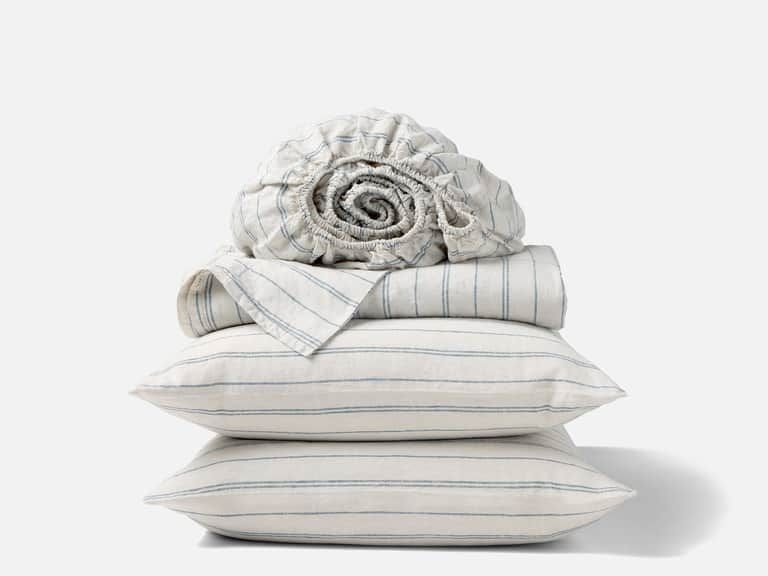
- Set contents: Check whether the package includes a flat sheet, fitted sheet, and pillowcases, and how the number or size of pillowcases varies by bed size.
Origin language can also help you understand a product’s supply chain, but it should be read carefully. A fiber’s growing region, a fabric’s weaving location, and the place where a finished item is assembled may be different. “Made in” does not necessarily describe every stage. The more clearly those stages are explained, the easier it is to make an informed comparison.
Fit is part of comfort
A breathable fabric cannot feel its best if the fitted sheet slips off or strains across the mattress. Measure the mattress, including any topper, and compare that measurement with the sheet’s stated dimensions and pocket depth. A deep pocket is useful only if it suits the height of your particular bed. If the mattress has a pillow top or an adjustable base, check the product’s fit notes rather than assuming standard sizing will be sufficient.
Elastic construction matters as well. A fitted sheet with elastic around the full edge may hold differently from one with elastic only at the corners. Seam placement and the cut of the sheet can affect the finish and ease of making the bed. These are practical considerations, but they also influence how smoothly the fabric lies beneath you.
When buying a full set, confirm what is included. Some sets are sold with pillowcases, while a fitted sheet or individual pillowcases may also be available separately. Pillowcase dimensions vary, so match them to the pillows you already own. A thoughtful fit keeps the bed looking composed without requiring an elaborate routine.
Care for longevity, not perfection
Good care preserves both the hand and the useful life of a sheet. Follow the label first: instructions may differ between linen products and between different cotton weaves. Many relaxed linen sets recommend a gentle wash and low heat, while other products may allow warmer water. Do not assume that a care routine suitable for one set applies to another.
Washing sheets with similar colors and avoiding an overloaded machine can help fabrics move freely through the wash. Use detergent according to its instructions, and avoid unnecessary harsh treatments. High heat can be demanding on fibers and may contribute to wear over time, so use it only when the product’s care guidance allows. Promptly removing sheets from the dryer can help reduce deep creasing, while a warm iron is an option for those who prefer a more tailored finish.
Linen’s relaxed character makes some wrinkling part of its visual language. There is no need to press every crease into submission if you enjoy the softer, lived-in look. With cotton percale, a smooth finish may be part of the pleasure, though its crispness can be enjoyed without treating the bed as a formal display. The aim is to keep bedding clean and comfortable, not pristine at all costs.
For longevity, rotate between sets when possible and store clean bedding in a dry place. Let the product’s specific instructions guide decisions about stain treatment and drying. These small habits are more useful than assuming that an expensive or certified sheet requires elaborate care.
A simple decision-making framework
If you are choosing between organic linen sheets and cotton percale, begin with feel. Linen is the more relaxed, textured option; percale is typically crisp and matte. If you are comparing linen with cotton sateen, think about surface: linen has a more natural, tactile hand, while sateen tends toward smoothness and drape. Then move from preference to practicalities—mattress fit, set contents, certification, and care.
It can help to rank your priorities. A warm sleeper might put airflow and a light hand at the top of the list. Someone who dislikes wrinkles may favor a smoother finish or simply choose a color and texture that make creasing less noticeable. A shopper focused on organic sourcing may prioritize a transparent certification claim. A household with several beds may care most about durability, straightforward laundering, and consistent sizing.
There is no need to chase a perfect specification on paper. Thread count is only one detail, and more is not automatically better. Likewise, “all-season,” “cooling,” and “luxury” are broad descriptions rather than guarantees. Translate those phrases into questions: What is the fiber? How is it woven? What does the fabric feel like? What can the fitted sheet accommodate? How should it be washed?
The final edit: choose for the life you actually live
The most compelling bedding is not necessarily the most elaborate. It is the set that feels welcome when you get into bed, fits your mattress without a nightly tug-of-war, and can be cared for within your real routine. Organic linen brings a relaxed, textured sensibility and the appeal of flax-based fabric. Cotton percale offers a crisp alternative; sateen brings a smoother hand. Each has its own mood, and each can make sense in a thoughtful bedroom.
Before buying, pause over the details that matter beyond the photograph or headline. Check what the fabric is made from, how it is constructed, what a certification actually indicates, and whether the size and washing requirements suit your home. Then trust the preference that is easiest to overlook in a specification sheet: how you want your bed to feel.
Breathable sheets are not a seasonal trick or a single material category. They are the result of choosing a fiber, weave, weight, and finish that work in concert with your sleep habits. Make that choice with clarity, layer according to the room, and let the bedding become more comfortable through ordinary use. The best set is the one that makes the transition from day to night feel effortless.