Textile standards · Bedding guide
What GOTS Certification Does—and Doesn’t—Tell You About Coyuchi Bedding
A certification label can bring welcome clarity to a complicated supply chain. But even a respected textile standard is not a complete biography of a finished sheet. Here’s how to read GOTS claims on Coyuchi bedding, what the standard can help establish, and which details still call for a closer look.
Published October 20, 2026
In the bedroom, sustainability is often presented as a feeling: a soft, rumpled sheet, a natural shade, a promise of sleep closer to nature. Yet the story behind a textile is not visible in its drape. To understand how a bedding item was made, shoppers need evidence that reaches beyond color, touch, and marketing language.
That is where GOTS—the Global Organic Textile Standard—can be useful. It is a standard for processing organic textile fibers, with requirements that extend through stages of textile production. It is not simply a claim that a plant was grown organically, nor is it a universal score for how sustainable a finished product is. The distinction matters when comparing certified bedding, including linen made from organic flax.
For Coyuchi bedding, the most careful approach is to treat certification as one meaningful part of the record, not the whole record. A product page may identify the fiber, its stated origin, the place where it was woven, construction details, care instructions, and any certification claim. Each answers a different question. Read together, they offer a more precise picture than a broad phrase such as “eco-friendly” ever could.
First, what GOTS is designed to address
GOTS is a voluntary standard for textiles made with organic fibers. Its scope concerns the processing and handling of those fibers through the textile supply chain, rather than certifying a finished product’s every possible environmental attribute. The standard includes requirements for organic fiber content, processing inputs, environmental practices, and social criteria at covered processing stages. Independent certification and documentation are central to how the standard is applied.
That breadth is important. A fiber’s agricultural origin is only the beginning of a textile’s journey. After flax is harvested, for example, it must be processed into fiber, spun into yarn, and woven or knitted into fabric. The fabric may then be washed, dyed, softened, cut, sewn, and finished. The steps—and the facilities performing them—can influence the final textile. A standard that looks beyond the farm can therefore tell shoppers more than a raw-material claim alone.
Still, the exact meaning of a claim depends on the product and the certification documentation behind it. Standards can have different product-label categories and thresholds, and a company’s general commitment does not automatically establish that every item in its collection is certified. Look for a clear claim for the specific item, and, where available, a certification reference or other documentation that allows the claim to be checked.
In short, GOTS can help answer a focused question: has this textile been certified under a standard covering organic fiber and specified processing and social requirements? It cannot, by itself, answer every question about land use, water use, transport, durability, end-of-life options, or a product’s total environmental footprint.
What the certification can signal about bedding
For bedding shoppers, GOTS certification can make a long and often opaque supply chain easier to assess. A certified textile claim indicates that the product is not being described solely through an unverified use of the word “organic”; it is connected to a defined standard and certification process. Requirements address more than fiber origin, including specified controls on processing chemicals and production practices within the standard’s scope.
This matters because “natural” and “organic” are not interchangeable with “untreated,” “chemical-free,” or “impact-free.” Textile manufacturing necessarily involves processes and inputs. A rigorous standard provides rules for what is permitted and how requirements are checked; it does not mean that no substances were used, or that a fabric has never been treated. Precise language is more useful than absolutes.
GOTS also includes social criteria for covered processing operations. That is relevant to a product whose journey involves agricultural production, mills, and manufacturing facilities. But shoppers should not interpret the certification as a complete audit of every social condition at every point in a global supply chain, unless the documentation specifically supports that conclusion. The standard’s scope and the product’s certification records matter.
On a product page, certification is most informative when presented alongside a clear material description. “GOTS certified” tells you something about compliance with the standard; “100% organic flax” describes the stated fiber composition; “woven in Portugal” identifies a manufacturing stage and location. These are related facts, but they are not substitutes for one another.
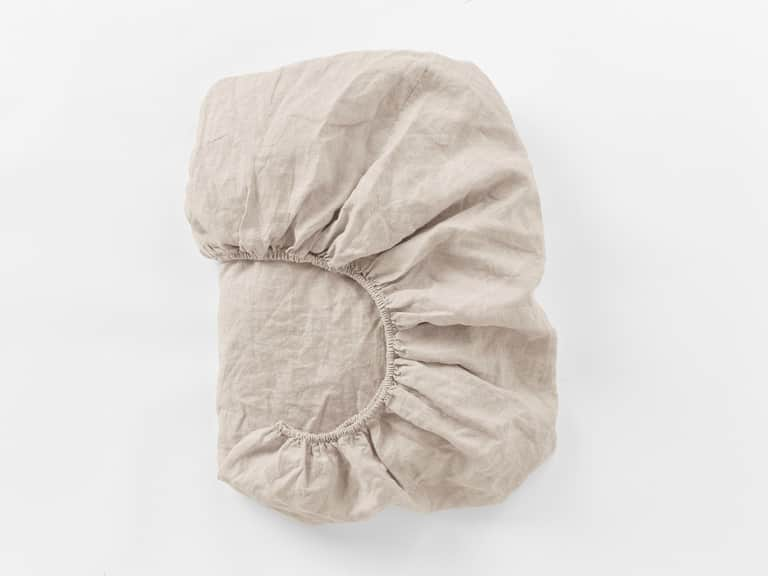
A Coyuchi example: the Organic Relaxed Linen Fitted Sheet
The product information for Coyuchi’s Organic Relaxed Linen Fitted Sheet states that it is made from 100% organic flax grown in France and woven into linen in Portugal, and identifies the sheet as GOTS certified. It also describes a 15-inch pocket, full elastic, pick-stitched cuffs, and a plant-based softener finish. Those details create a more useful product picture than a certification statement standing alone.
Each point has its own role. The organic-flax description identifies the stated fiber and agricultural origin. The weaving location offers a specific piece of manufacturing information. The GOTS claim concerns certification under the textile standard. The pocket depth and elastic describe fit and construction, while the care instructions—cold wash with like colors, tumble dry low, and warm iron if desired—help set expectations for everyday use.
The product description also presents the linen as breathable and temperature regulating. Such language describes the intended character and performance of linen, not a separate guarantee supplied by GOTS. A standard for organic textile processing should not be mistaken for an independent test of sleep comfort, temperature performance, or durability over a particular number of years.
This distinction is not a criticism of the product; it is a way to read claims accurately. Certification can support confidence in one dimension of a bedding choice, while construction, fit, feel, care, and personal preference remain questions for the shopper. A well-informed purchase is rarely made from one adjective alone.
What GOTS does not tell you
A certification is not a complete lifecycle assessment. It does not, simply by appearing on a product page, provide a cradle-to-grave accounting of greenhouse gas emissions, water consumption, land use, transport, packaging, or the product’s eventual disposal. Those impacts depend on many factors, including farming conditions, processing choices, energy sources, distance traveled, product lifespan, and what happens after use.
Nor does GOTS certify a particular feel. Linen may be crisp, weighty, soft, airy, or relaxed depending on fiber quality, yarn, weave, finishing, and washing. A certification does not tell you whether the cloth will suit a hot sleeper, whether a fitted sheet will suit your mattress, or whether a particular handfeel is right for you. These are matters of product design and individual experience.
Certification also does not mean every part of an item is made from the same fiber. Bedding can combine different materials: a linen cover may include buttons, elastic, thread, or other components. Check the composition and construction details rather than assuming that a claim about the main fabric describes every trim or accessory. If a product includes a pillow insert, duvet, or separate component, assess its details independently.
Finally, the word “certified” should not be treated as a blanket guarantee of health outcomes. A standard’s restrictions and controls may be relevant to consumers seeking more transparent textile processing, but a certification is not a medical claim and does not establish that an item is hypoallergenic or suitable for every sensitive sleeper. Personal sensitivities vary, and product-specific information remains important.
How to read the product page, detail by detail
When assessing Coyuchi bedding—or any certified bedding—move through the information in a deliberate order. Start with the exact item name and the specific certification statement. A brand’s broader sustainability commitments are valuable context, but they do not replace a product-level claim. If the wording is unclear, look for the certification scope, label category, or documentation associated with that item.
- Check the fiber composition. Is the item described as linen, cotton, or a blend? Does the page state a percentage, such as 100% organic flax, or use a broader phrase? A clear composition is the foundation for understanding what you are buying.
- Separate origin from certification. A stated growing region identifies where the fiber was grown; a weaving location identifies a later production stage. Neither detail alone proves certification, and certification alone does not reveal every production location.
- Look for a product-specific GOTS claim. Verify that the claim applies to the item under consideration, rather than inferring certification from the brand, collection, or a different product in the range.
- Read the construction information. For sheets, useful details include mattress pocket depth, elastic coverage, dimensions, and what pieces are included in a set. For pillow covers, check the size and whether the insert is included.
- Follow the care instructions. Washing and drying can affect the textile’s appearance and useful life. The product’s instructions are more relevant to its care than a general rule for all linen.
- Ask what your priority is. If your main concern is organic fiber, focus on composition and certification. If it is longevity, examine construction and care. If it is the full environmental profile, look for additional, product-specific evidence beyond a certification label.
This is not an invitation to become a supply-chain auditor before buying a pillowcase. It is simply a way to let each claim do the work it can genuinely do—and no more.
Certification and the quiet luxury of useful detail
Organic linen’s appeal is tactile as much as ethical. Flax linen is valued for its characteristic texture and strength, and many shoppers appreciate the way a relaxed weave sits on a bed: less polished than a pressed hotel sheet, but no less considered. A certification cannot prescribe that look. It can, however, add a framework for understanding how organic textile claims are managed through processing.
That framework becomes more meaningful when accompanied by details that might seem modest at first glance. The fitted sheet’s 15-inch pocket says something about mattress compatibility. Full elastic speaks to how the sheet is designed to stay in place. A plant-based softener is a stated finish, not a substitute for the certification itself. Clear care instructions help translate a purchase into a product that can be used and maintained.
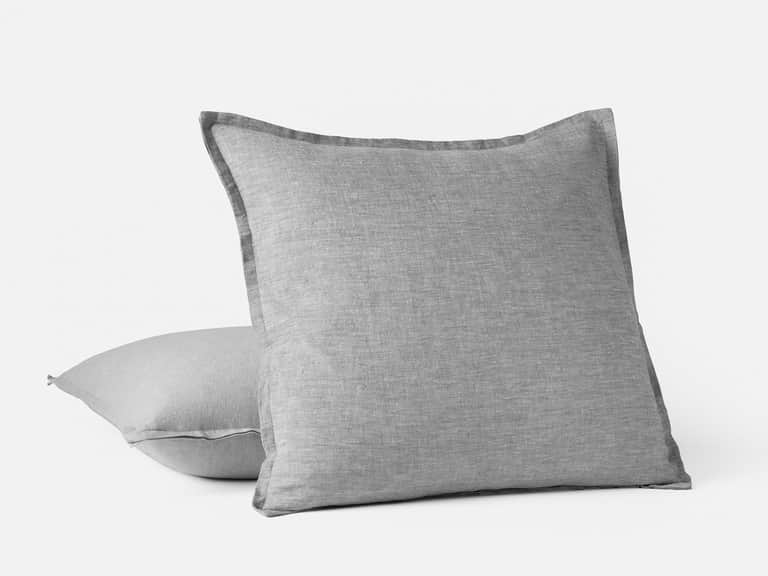
The same care applies to decorative linen. Coyuchi’s Organic Relaxed Linen Decorative Pillow Cover is described as 100% organic linen, grown in France and woven in Portugal, with a washed, relaxed hand. Its product information specifies that the cover is sold individually and the insert separately, and recommends a cold, gentle machine wash with low tumble drying. The description provided for this item does not itself state a GOTS certification, so it should not be assumed certified on the basis of another Coyuchi item’s certification claim.
That is the essential habit: read the particular page, not the aura around a brand. In a market where natural textures and sustainability language are often styled together, the difference between a documented attribute and an attractive impression is worth keeping in view.
What “organic” means—and why the label matters
Organic fiber claims concern agricultural production, but the word on its own can leave important questions unanswered. What material is organic? What proportion of the product does it represent? How is that fiber handled after harvest? A textile standard such as GOTS addresses processing as well as organic fiber requirements, helping connect the agricultural claim to later stages in the textile chain.
Even so, “organic” should not be read as a synonym for “perfectly sustainable.” Farming systems have different impacts according to local conditions and practices; manufacturing requires resources; products travel; and the way a household cares for and keeps bedding influences its useful life. Certification is a tool for verification within a defined scope, not a ranking that settles all environmental comparisons.
Comparisons are clearest when like is set against like. A GOTS-certified linen sheet and a conventional cotton sheet differ in fiber, farming, processing, weave, and possibly weight. A simple claim that one is “better” may flatten those differences. Shoppers can instead identify the qualities they value—verified organic sourcing, a particular natural fiber, construction, care requirements, or a longer intended service life—and assess the available evidence against those priorities.
A practical framework for a more considered choice
For a bedding purchase, begin with function. Confirm the mattress dimensions and pocket depth before choosing a fitted sheet. Consider whether you want a set or a single replacement piece, and check exactly how many pillowcases are included. These practical details matter: an item that does not fit well or meet your needs is less likely to become a lasting part of the home.
Then consider material and feel. Linen’s relaxed texture and breathable character appeal to many people, while others prefer the crispness of percale or the smoother hand of another weave. If possible, consult detailed product specifications and the care label. A product described as softening with use may change in handfeel over time, but the pace and degree of change will depend on use and laundering.
Finally, evaluate claims in layers. A product-specific GOTS claim can be a meaningful indicator about organic fiber and specified textile processing requirements. Fiber composition tells you what the fabric is made from. Origin statements describe selected parts of the route. Construction and care information help you judge usability and maintenance. Additional environmental claims should be supported by additional evidence.
This layered reading is more useful than expecting one seal to answer everything. It rewards brands that provide clear, specific information, and it helps shoppers avoid confusing certification with a promise of zero impact, universal comfort, or flawless performance.
The takeaway
GOTS certification can help shoppers make sense of organic textile claims because its scope reaches beyond the field and into specified stages of processing, with requirements that include environmental and social considerations. For a certified Coyuchi linen item, that claim is a useful signal—but it is not a complete sustainability report, a durability guarantee, a health assurance, or a description of every trim and component.
Read the individual product details with the same care you would give the fabric itself. Confirm the exact certification claim. Note the material composition and stated origin. Check the construction, dimensions, and care guidance. Where a product description does not explicitly make a certification claim, do not infer one from the brand or from a different item.
The most trustworthy picture comes from the combination: a defined standard, precise product information, and a clear understanding of what remains outside the label’s scope. That is how a considered purchase begins—not with a promise that one mark can say everything, but with enough detail to ask better questions.
At a glance: what GOTS can and can’t tell you
It can help indicate
- That a textile is certified under a standard for organic fibers and textile processing.
- That specified processing, environmental, and social requirements apply within the standard’s scope.
- That an organic claim is connected to certification and documented requirements, rather than being only a broad marketing phrase.
It does not, by itself, establish
- The complete environmental footprint of a finished product.
- That every trim or separate component has the same material or certification status.
- A particular feel, fit, lifespan, health outcome, or end-of-life option.